Just yesterday, we dove deep into an operational masterclass focused on consolidating IT infrastructure. We explored how middle-market operators can finally eliminate the drag caused by outdated systems, clearing the way for streamlined workflow automation. Now, building on that digital foundation, it’s time to tackle a new challenge together. Whether you’re in specialized manufacturing, commercial logistics, healthcare, regional contracting, or B2B services, you’ll recognize this scaling bottleneck: legacy labor and the friction of maintaining your human capital.
So, how do you start clearing away legacy labor delays? The best move for SMB executives is to pinpoint at-risk key roles, map undocumented knowledge, and refresh your onboarding and training practices. It’s worth launching a rapid skills audit, documenting those essential workflows, and kickstarting upskilling programs that offer quick wins. These are your first steps from simply recognizing the problem to making real, operational progress.
Fast-forward to the last quarter of 2026: middle-market companies (with revenues between $10 million and $1 billion) are all feeling the heat of a competitive labor market. Ongoing technical skill shortages, high turnover, and the rush to integrate AI-driven workflows mean that keeping your HR stable isn’t just nice to have—it’s essential. If your business still relies on uncoordinated onboarding, informal knowledge-sharing, or lacks systematic upskilling, you’ll quickly notice output slowing, quality dipping, and customer service taking a hit.
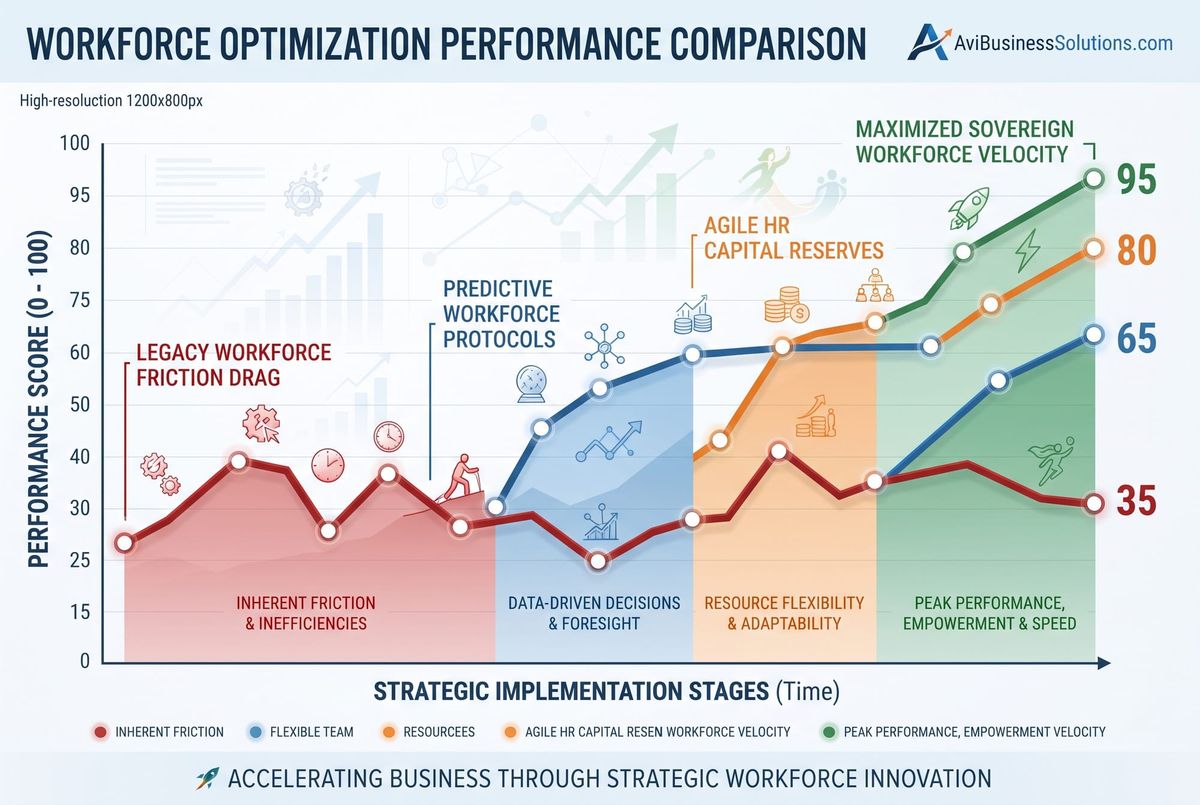
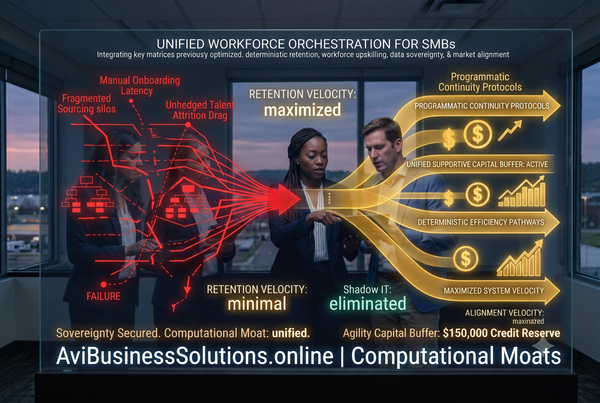
Let’s break it down: legacy labor drag sets in when businesses treat HR as a passive back-office function rather than an active driver of Human Capital Velocity. If you’re replacing experienced employees without the right technical skills or running operations on a shoestring, you’ll find your Cognitive Operating Runway shrinking, training costs climbing, and client trust slipping away. The fix? To protect your margins and achieve what we call Operational Sovereignty, forward-thinking SMBs need to move beyond reactive hiring. That’s where a structured Human Capital Velocity and HR Continuity Matrix comes into play.
The Real Cost of Workforce Disruption & Skills Mismatches
Picture this: you’re running a growing SMB, but your HR processes aren’t fully integrated. Suddenly, a key team member—someone who’s been the go-to for decades—hands in their resignation. What happens next? Projects stall, quality suffers, and customer management gets messy. These gaps reveal the real weaknesses in your operating plans, right when you least expect it.
Think about it: if your facility has 100 staff and you lose 20% every year, you’re running with 20 empty seats, drawn-out interviews, or rushed onboarding—none of which help productivity. And if your team is working with advanced machinery or technical software without proper training, the bottleneck only gets tighter. The hit to your EBITDA margins? It’s far worse than the cost of simply running a strong upskilling program.
Here’s a real-world story: one regional logistics company with 120 employees was plagued by high turnover and inconsistent onboarding. When they rolled out a structured upskilling program—complete with standardized training modules and internal certifications—they slashed turnover from 22% to 12% in just a year. Operating margins jumped by 3.5%, and fulfillment times sped up, proving how powerful these changes can be for middle-market operators.
So, what does it take to overcome this human-capital bottleneck? The answer lies in a deliberate, well-structured approach to workforce resilience. Leaders should review workflow dependencies, launch upskilling programs, create SOPs, diversify recruitment channels, and build HR capital reserves to fuel rapid hiring and training. Shifting from reactive hiring to a proactive HR continuity program means you’ll keep your business moving fast, secure the labor output you need, and protect your profits every quarter.
Fuel Your Workforce Acceleration RunwayYou might be wondering: how can you get a license for specialized employee training software, formalize your SOPs, or launch targeted recruitment campaigns—without straining your day-to-day cash flow? The answer is simpler than you think. By turning to
AviBusinessSolutions.com, you can unlock up to $500,000 quickly and keep your human capital strategy moving. Just fill out a brief online application, get a decision within 24 hours, and you’ll be set to move forward on your workforce projects with confidence.
Trust Optimization and Corporate Governance Sovereignty
In today’s business-to-business world, stability and HR support say a lot about a company’s health. When clients, supply partners, or underwriters do their homework, they’re looking at your retention rates, upskilling programs, and compliance training. If your small business can show off a robust, structured HR system, you’re sending a clear signal: we’ve got operational control—making you a top contender for valuable commercial deals.
Think of it this way: when you organize your balance sheet around dynamic workplace capitalization, you’re giving your company a Trust Multiplier. Partners, lenders, and clients see that you control operational throughput. With an agile capital reserve, you’re free to run strategic upskilling, pay for specialized certifications, or ramp up recruitment—all without tapping into your core cash. That’s what AviBusinessSolutions is here for: capital buffers, specialized loans, and credit lines that help turn HR continuity into your long-term competitive moat.
Build Your Sovereign Corporate Workforce MoatIf you’re aiming to transform your company’s training tech, launch a national upskilling push, or automate HR end-to-end, you need solid, dependable funding behind you. That’s why
AviBusinessSolutions.com offers up to $2 million in business capital—so you can expand HR infrastructure and keep your spot at the top of your market.
Executing the Human Capital Velocity & HR Continuity Audit
Let’s talk about how to take control of your company’s human capital velocity. First up: conduct a systematic Supportive Capacity Audit. This process helps you spot workforce vulnerabilities and keep your operations running smoothly. Here are some key questions to ask your leadership team as you get started:
Which critical posts or roles would pose a major operational risk if left vacant for 30 days?
- In what situations does undocumented or tribal knowledge occur, and how is it passed on or recorded?
- Are the onboarding process and technical training courses up to date and standardized across all departments?
- How often are skills gaps and technical competencies officially assessed?
- What is the average time it takes for newly hired or promoted employees to become productive?
- Have we developed succession plans and talent pipelines for all leadership and technical positions?
By using these checkpoints, your executive team will get a much clearer sense of how resilient your workforce really is—and how ready you are for true HR continuity.
- Map critical workflow dependencies by listing major operational processes and identifying situations with 'key-man' dependencies where undocumented tribal knowledge resides with a single staff member.
- To identify the need for upskilling in AI, specialized software, and advanced machinery, conduct technical competency assessments across all teams.
- Set up protocols for documenting SOPs: turn existing workflows and informal knowledge into standardized, easily accessible digital SOP repositories.
- Create programmatic upskilling pathways by establishing clear career development and certification routes based on competencies for all operational and leadership positions.
- Set aside dedicated financing for workplace modernization: secure specialized commercial loans to cover HR technology licensing, technical upskilling programs, and specialized certifications.
- Maintain an Agility HR Continuity Credit Reserve by securing a flexible commercial line of credit that can be used in real time to meet unexpected recruitment demands, cover specialized staff training costs, and pay for emergency HR advisory expenses.
By systematically tackling labor legacy problems, your leadership team can finally breathe easier—free from HR worries and positioned to achieve real Operational Sovereignty.
Conclusion: Commanding Workforce Velocity
Here’s the bottom line: in late 2026, companies that treat HR continuity and workforce productivity as strategic investments—not just paperwork—come out ahead. Ditch outdated labor drag, formalize your upskilling, and back your business with flexible capital to get in the fast lane. This is your era—the age of the Sovereign, High-Velocity SMB.
Ready to get started? Here are your key action steps:
1. Audit your workforce to spot at-risk roles, hidden pockets of undocumented knowledge, and training gaps that slow things down.
2. Set up formal onboarding and ongoing training programs to boost technical skills and reduce staff turnover.
3. Build out clear SOPs and create a central knowledge hub to keep your HR operations humming, no matter what.
4. Make sure you have capital reserves and flexible financing lined up—so you can fund recruitment, training, and certification programs whenever you need them.
Focus on these priority actions, and you’ll build a resilient, high-velocity workforce that’s ready for anything the 2026 market throws your way.
And here’s one more thing: keep your financial flexibility front and center. Whether you’re rolling out new training, ramping up for busy seasons, or automating HR, a flexible Business Line of Credit—up to $150,000 from
AviBusinessSolutions.com—means you can draw exactly what you need, when you need it, to keep your human infrastructure strong and responsive.
#WorkforceManagement2026 #AviBusinessSolutions #HRContinuity #BusinessLoans #CommercialCredit #SMBFinancing #WorkingCapital #OperationalSovereignty #B2BGrowth #EmployeeUpskilling