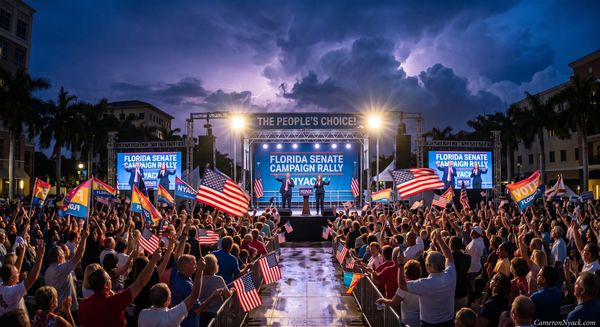
Madam President: The Pelosi Presidency
Explore the hypothetical presidency of Nancy Pelosi. By examining her 35-year legislative record, this speculative biography imagines what America might have gained if its most powerful female leader and master of democratic institutions had held the Oval Office.

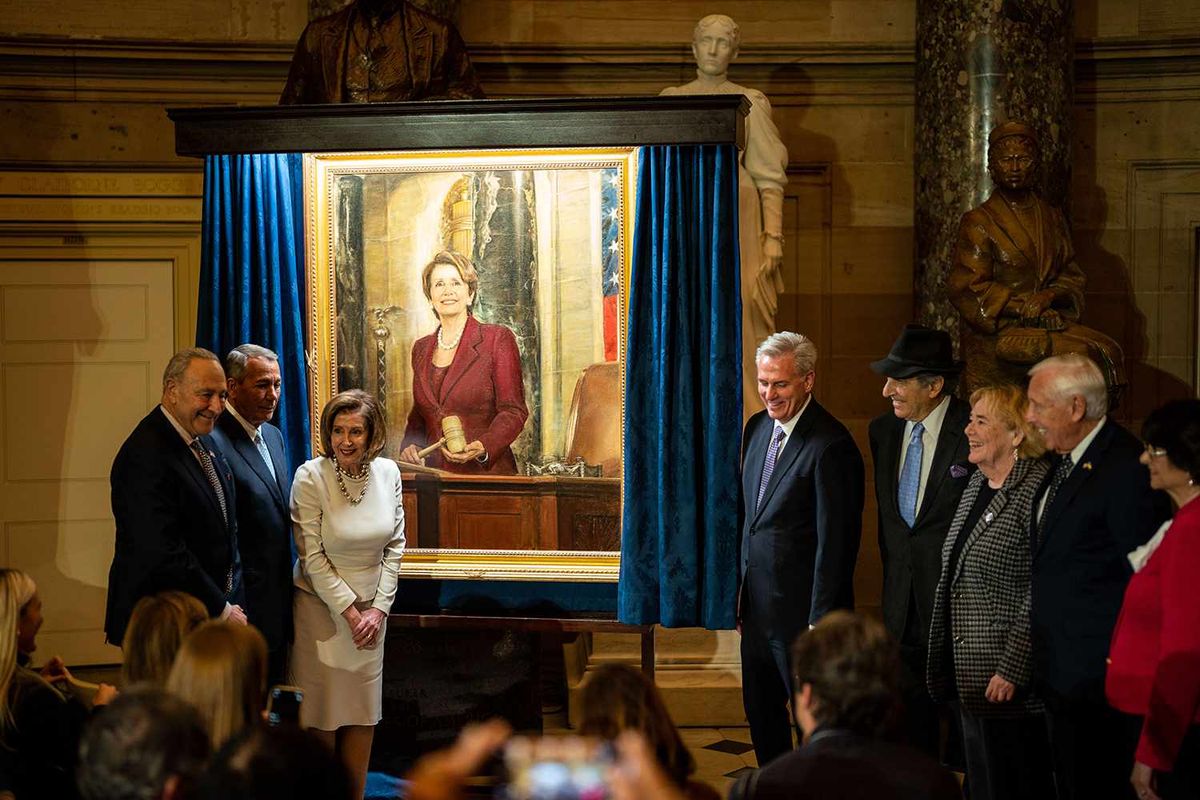
A Vision for America — Imagining Eight Years of Nancy Pelosi in the Oval Office
◆ ◆ ◆
Written by
Cameron Nyack
© 2026 | All Rights Reserved
This ebook manuscript is a work of political narrative nonfiction and informed speculation.
Table of Contents
Foreword
Chapter 1 — The Roots of Greatness: Pelosi’s Early Life and Formation
Baltimore origins • The D’Alesandro household • Faith, family, and formation
Chapter 2 — The Architect of Power: Climbing the Congressional Ladder
1987 entry • Rise to Speakership • The marble ceiling broken
Chapter 3 — The Architect of Healthcare: The ACA and Beyond
Passing the ACA • Holding the caucus • A presidential healthcare vision
Chapter 4 — Fighting for the Many: Social Welfare and Economic Justice
Recovery Act • Safety net • A living wage and beyond
Chapter 5 — The Green Gavel: Climate Action and Environmental Leadership
Environmental roots • Climate legislation • A Green presidency
Chapter 6 — The Art of the Possible: Bipartisanship and Legislative Strategy
Pragmatic genius • COVID negotiations • Executive strategy
Chapter 7 — A More Perfect Union: Inclusion, Diversity, and Representation
LGBTQ+ champion • Immigrant advocacy • A Cabinet like America
Chapter 8 — Madam President: The Hypothetical Presidency Explored
First 100 days • Foreign policy • History made
Chapter 9 — The Philosophy of Governing: Power, Purpose, and Principle
Catholic social teaching • Governing philosophy • LBJ & Tip O’Neill compared
Chapter 10 — The Legacy: What She Built and What She Made Possible
Enduring impact • Norms defended • The measure of greatness
Epilogue
Foreword
There is a particular kind of American greatness that is never properly rewarded in its own time. It is the greatness of the builder rather than the breaker, the assembler rather than the dismantler, the leader who counts votes in a quiet room and moves history forward with patient, disciplined ferocity while the cameras look elsewhere. This book is about that kind of greatness. It is about Nancy Patricia Pelosi.
I did not write this book because I believe the presidency is the only measure of a political life. I wrote it because I believe that imagining what might have been is one of the most honest tools we have for understanding what is. When we ask what a Pelosi presidency would have looked like, we are not indulging in fantasy. We are conducting a serious exercise in political analysis — holding her thirty-five-year record up to the light and asking what it tells us about the kind of leader America has so rarely allowed itself to have.
What it tells us is extraordinary. Here was a woman who entered Congress in 1987 representing a city the rest of the country considered exotic, and who, over the next four decades, proceeded to master the machinery of American power more completely than nearly anyone who has ever held elected office. She passed the Affordable Care Act when political professionals said it could not be done. She managed a Democratic caucus that spanned the ideological spectrum from democratic socialists to Blue Dog conservatives, and she held it together through sheer force of will, strategic intelligence, and a mother’s instinct for knowing when to comfort and when to demand. She stared across tables at presidents and Republican leaders and walked away having won — not every battle, but enough of them to matter to millions of lives.
This book is also about gender and political courage. Nancy Pelosi did not rise despite being a woman. She rose because of everything that being a woman — a daughter, a wife, a mother of five — gave her that a conventional career politician never has to develop. She understood negotiation as a lived skill long before she ever entered a committee room. She understood that power is most effective when it is worn lightly and wielded precisely.
America has never had a woman president. It remains, among wealthy democracies, a remarkable outlier in that regard. This book asks a single, probing question: what would we have gained if it had? The answer, I believe, is everything.
◆
CHAPTER ONE
The Roots of Greatness: Pelosi’s Early Life and Formation
Little Italy, Baltimore, and the D’Alesandro Dynasty
To understand Nancy Pelosi, you must first understand a particular row house in Baltimore’s Little Italy neighborhood in the 1940s and 1950s — the kind of house where politics was not an abstraction debated in college seminars but a living, breathing obligation practiced daily at the kitchen table, at the front door, and in the streets of a working-class immigrant neighborhood that depended on government to be good. The house belonged to Thomas D’Alesandro Jr., Nancy’s father, who served as a United States Congressman from 1939 to 1947 and then as Mayor of Baltimore from 1947 to 1959. In that household, public service was not a career choice. It was a calling, a duty, and a way of seeing the world.
Thomas D’Alesandro was a consummate machine politician in the best sense of that complicated term. He understood that government’s purpose was to solve the concrete problems of concrete people: the family that needed a housing voucher, the veteran who needed a job, the widow who needed help navigating a bureaucracy that seemed designed to exhaust her. His office was open to constituents in a way that made the boundary between public service and personal life nearly invisible. Young Nancy absorbed this understanding not as ideology but as instinct. She once recalled that the family home functioned as a kind of full-service political constituency office from morning until night, with neighbors coming to her father — and to her mother, Annunciata, who managed the constituent requests with quiet executive precision — for help with the practical burdens of American life.
In many ways, her mother was the more formative figure. Annunciata D’Alesandro, known as “Big Nancy,” was a force of organizational genius who kept meticulous records of every favor asked and answered, every constituent served, every relationship maintained. She demonstrated to her daughter that political power, at its most effective, is relational — built not on grand gestures but on the accumulation of trust, on remembering names and needs, on being present and reliable. This was not a lesson Nancy Pelosi would ever forget. It would become the operating principle of her entire career.
|
“ I grew up in a family that was
devoutly Catholic, deeply patriotic, and staunchly Democratic. We knew that
our faith was a continuation of our commitment to community. ” — Nancy Pelosi |
Faith, Heritage, and the Architecture of Values
Nancy Pelosi’s Catholicism is not merely biographical detail. It is the structural foundation of her political philosophy. Raised in a devoutly Catholic Italian-American family, she was shaped by a tradition that placed particular emphasis on the dignity of the human person, the community's obligation to care for its most vulnerable members, and the idea that wealth is a stewardship rather than a possession. Catholic social teaching — with its concepts of subsidiarity, solidarity, and the preferential option for the poor — provided her with an ethical grammar that she would speak fluently throughout her career, even when she was not naming it explicitly.
Her Italian-American heritage added another layer. The immigrant narrative of the D’Alesandro family, like countless other Catholic immigrant families in mid-century America, was one of transformation through civic participation. To be American was to engage with the institutions of democratic life — to vote, to run for office, to show up at the city council meeting, to demand from government the dignity that the market alone could not provide. This was not a passive inheritance. It was an active one, and Nancy lived it daily.
She attended Trinity College in Washington, D.C., a Catholic women’s college, where she studied political science. It was there that she met Paul Pelosi, whom she would marry in 1963. The couple eventually settled in San Francisco, where Paul built a successful business career, and where Nancy would spend her years before entering politics doing what her mother had done before her: building community, raising children, and quietly accumulating the organizational knowledge and personal relationships that would eventually make her formidable.
The Years Before the Gavel: Motherhood as Political Preparation
Between her marriage in 1963 and her entry into Congress in 1987, Nancy Pelosi raised five children, managed a household, and built what can only be described as a parallel political career entirely outside of elected office. She became deeply embedded in California Democratic Party politics, serving as a party volunteer, then as chair of the California Democratic Party, then as finance chair of the Democratic Senatorial Campaign Committee. These were not ceremonial roles. They required the skills that would define her congressional career: persuasion, coalition-building, the management of competing egos and interests, the cultivation of donors, the execution of complex organizational strategies across large and diverse constituencies.
It is fashionable in our culture to treat the years a woman spends outside formal career structures as a gap, a pause, a period of waiting for her “real” life to begin. Nancy Pelosi’s years as a mother and party organizer were nothing of the sort. They were her education. They gave her something that many of her congressional colleagues, who had spent their twenties and thirties climbing the formal ladder of electoral politics, simply did not have: a deep, embodied understanding of how institutions actually function, how people actually make decisions, and how communities actually hold together under pressure. She would draw on that understanding for the rest of her public life.
Her rise was not accidental, nor was it simply a product of luck or timing, though both played their roles. It was the product of decades of deliberate preparation, of sustained engagement with the full texture of democratic life, from the ward healer’s office in her father’s Baltimore to the donor dinners of San Francisco’s Nob Hill. By the time she entered Congress at age forty-seven, Nancy Pelosi had already lived more than most politicians manage in a full career. She was ready.
CHAPTER TWO
The Architect of Power: Climbing the Congressional Ladder
A Special Election and a Mandate to Lead
In June 1987, Nancy Pelosi won a special election to represent California’s 5th Congressional District — the seat covering San Francisco — following the death of Sala Burton, who had herself succeeded her husband, Philip Burton, one of the most formidable liberal legislators in congressional history. The endorsement of Sala Burton before her death was a powerful passing of the torch, but Pelosi won the seat on her own terms, defeating a field that included the son of the very Phillip Burton who had once dominated San Francisco politics. She entered Congress not as an heir but as a competitor, and that distinction mattered from the first day.
From the beginning, Pelosi played the inside game with a sophistication that belied her status as a newcomer. She sought committee assignments with strategic care, working her way onto the Intelligence Committee and the Appropriations Committee — the two panels most central to national power. She cultivated relationships across the caucus with methodical precision, making herself useful to members in ways large and small, accumulating the social capital that is the true currency of congressional influence. Her fundraising prowess, built on her San Francisco network and her years of party finance work, made her indispensable to colleagues whose campaigns depended on money she could help them raise. Power, she understood instinctively, is not seized. It is accrued.
The Long Climb: Whip, Leader, Speaker
In 2001, Pelosi made her move for formal leadership, running for House Minority Whip and winning. The whip is the caucus’s vote-counter, the person responsible for knowing where every member stands and for delivering the votes when it matters. It is, in many ways, the most demanding technical role in congressional leadership, requiring not just political intelligence but an almost encyclopedic knowledge of individual members’ constituencies, concerns, ambitions, and vulnerabilities. Pelosi excelled at it with a thoroughness that her colleagues found almost unnerving. She knew not only how members would vote but why, and what it would take to move them.
In 2002, following the Democrats’ poor performance in the midterm elections, she ran for House Minority Leader and won, becoming the first woman to lead a major party in Congress. She held that position through the long years of the Bush administration’s second term, maintaining caucus discipline and building the strategic vision that would deliver Democrats the House majority in 2006 — a majority that she had worked for, recruited for, fundraised for, and argued for with relentless energy. When Democrats swept to power in November 2006, it was in no small part a testament to her organizational genius and her unerring instinct for what kinds of candidates could win in which kinds of districts.
|
“ For our daughters and our
granddaughters, today we have broken the marble ceiling. ” — Nancy Pelosi, upon her
election as Speaker of the House, January 4, 2007 |
January 4, 2007: The Marble Ceiling Falls
The moment deserves to be held for a moment before we move past it. On January 4, 2007, Nancy Patricia D’Alesandro Pelosi was elected Speaker of the United States House of Representatives, the first woman in the 218-year history of the institution to hold that office. She walked to the rostrum surrounded by children — her grandchildren, the children of colleagues, a deliberate and beautifully crafted image — and she received the gavel from the outgoing Speaker with the quiet gravity of someone who understood exactly what she was receiving and exactly what it meant.
The significance was not merely symbolic, though the symbolism was profound. The Speaker of the House is second in the line of presidential succession, after the Vice President. For the first time in American history, a woman stood that close to the presidency. But more than that, the speakership is a position of genuine institutional power: the ability to set the legislative agenda, control committee assignments, manage floor proceedings, and shape the very structure of what Congress can and cannot do. Pelosi was not a figurehead. She was the most powerful woman in American political history, and she intended to use that power.
The Art of the Caucus
What made Pelosi extraordinary as Speaker was not the symbolic weight of her historic position but the technical mastery with which she exercised it. She was a vote-counter of almost supernatural precision. Colleagues have recalled her ability to know, at any given moment, exactly where every Democratic member stood on any given vote — not just their position but their reasoning, their concerns, the specific language that would move them from undecided to yes. She ran her caucus not through intimidation, though she was capable of formidable directness, but through a combination of incentive, persuasion, and the long memory of someone who had been keeping score for decades.
She also understood the architecture of legislative sequencing in ways that few of her contemporaries did. She knew which bills had to pass before which other bills could be politically feasible. She knew how to manage the relationship between the progressive wing and the moderate wing of her caucus — a challenge that would have broken a lesser leader — by giving each side enough wins to keep them at the table while never losing sight of the larger legislative goals. She governed her caucus the way a conductor governs an orchestra: knowing every instrument, knowing when to bring each one in, and knowing that the music only works if everyone plays together.
This was the foundation on which the hypothetical Pelosi presidency would have been built. Not charisma alone, not ideology alone, but the extraordinary, painstaking, irreplaceable skill of making democratic institutions actually function.
CHAPTER THREE
The Architect of Healthcare: The ACA and Beyond
The Bill That Could Not Be Passed
In the winter and spring of 2010, Washington had largely given up on the Affordable Care Act. The bill had been grinding through Congress for the better part of a year. Democrats had lost their filibuster-proof Senate majority with the special election of Scott Brown in Massachusetts in January 2010. The conventional wisdom, expressed by some of the shrewdest political operatives in Washington, was that the moment had passed. Healthcare reform was dead. The White House itself was reportedly considering a scaled-back version, a series of smaller bills that might preserve some of the administration’s health agenda without the political risks of a comprehensive overhaul.
Nancy Pelosi did not accept this analysis. She had spent the previous year keeping a fractious Democratic House caucus on board with a bill that progressive members felt did not go far enough and that moderate members feared would cost them their seats. She had threaded this needle through months of negotiation, amendment, and the kind of one-on-one persuasion work that rarely makes the evening news but determines the outcome of every major piece of legislation. And she was not going to let it die now.
She argued, forcefully and persistently, that the Senate bill — the version that could pass through reconciliation, bypassing the Republican filibuster — should be brought to the House floor, that the votes were there if she found them, and that the political cost of failure exceeded the political cost of a difficult vote. She was right. On March 21, 2010, the House passed the Affordable Care Act (H.R. 3962). It was the most significant expansion of the American social contract since the passage of Medicare and Medicaid in 1965, and Nancy Pelosi made it happen through sheer, disciplined, categorical force of political will.
|
“ We have to pass the bill so that
you can find out what is in it, away from the fog of the controversy. ” — Nancy Pelosi, March 2010.
Often misquoted, Pelosi’s comment reflected the difficulty of communicating
complex legislation in a media environment dominated by distortion, not an
admission of ignorance. |
What the ACA Actually Did — and What It Meant
The Affordable Care Act, for all the political turbulence surrounding it, was a transformational piece of legislation. It extended health coverage to more than twenty million previously uninsured Americans. It prohibited insurance companies from denying coverage based on pre-existing conditions, a protection that had previously been unavailable to millions of Americans with chronic illnesses or prior medical histories. It allowed young adults to remain on their parents’ insurance until age twenty-six. It established exchanges where individuals without employer-based coverage could purchase insurance with income-based subsidies. It expanded Medicaid in states that chose to adopt it, bringing coverage to millions of the poorest Americans.
These were not abstract policy achievements. They were lives changed, medical bankruptcies avoided, diagnoses caught early, and treatments received that had previously been out of reach. The human stakes of the ACA were as real as anything Congress had ever voted on, and Pelosi understood this with a moral clarity that gave her the conviction to fight for it when others counseled retreat.
The Presidential Vision: Healthcare Completed
|
Note on Speculative Content: The following section imagines,
based on Pelosi ’ s stated policy positions and
legislative record, what healthcare policy under a hypothetical Pelosi
presidency might have looked like. It is analytical speculation grounded in
her actual record, not a statement of established fact. |
Had Nancy Pelosi ascended to the presidency, the work she began with the ACA would almost certainly have become her first and most defining domestic legislative priority. Her goal, stated consistently over the course of her career, was not merely to preserve the ACA but to complete it — to address the coverage gaps, cost pressures, and structural vulnerabilities that the law’s compromises had left unresolved.
The centerpiece of a Pelosi healthcare agenda would have been a robust public option: a government-administered health insurance plan available to individuals through the ACA exchanges, competing with private insurers and driving down premiums by leveraging a large risk pool and lower administrative overhead. She had supported this provision throughout the ACA debate and had watched it stripped from the final bill by Senate moderates. As president, she would have had the bully pulpit, the executive authority, and the legislative experience to make the case for it with unprecedented force.
Beyond the public option, a Pelosi presidency would almost certainly have pursued direct Medicare negotiation of prescription drug prices — a reform that had been blocked for decades by pharmaceutical industry lobbying and that she championed repeatedly as Speaker. The human cost of America’s drug pricing system, in which Americans pay two to five times what citizens of peer nations pay for identical medications, had always struck her as a straightforward injustice, and she had the political machinery to address it. She would also have expanded mental health parity requirements, ensuring that mental health treatment received the same coverage guarantees as physical healthcare — a reform with profound implications for the millions of Americans dealing with addiction, depression, and anxiety disorders.
What a Pelosi presidency would have meant for American healthcare, in the fullest sense, is this: the completion of a project that Franklin Roosevelt imagined, that Harry Truman proposed, that Lyndon Johnson partially achieved, and that Barack Obama advanced. It would have meant, at last, a country in which the accident of birth into an uninsured family did not determine whether you lived or died of a preventable illness. It would have meant, in Pelosi’s own words, making healthcare a right and not a privilege — not as a slogan but as a governing achievement.
CHAPTER FOUR
Fighting for the Many: Social Welfare and Economic Justice
A Budget Is a Moral Document
Nancy Pelosi has said, in various forms over the years, that “the budget is a statement of our values.” It is a phrase she has used so consistently and in so many contexts that it might be dismissed as a political talking point if it did not so accurately describe the governing philosophy she has brought to every major piece of economic legislation she has touched. For Pelosi, the allocation of public resources is not a technical exercise to be managed by economists in basement offices. It is a moral act, and it reveals, with unmistakable clarity, what a society believes about its obligations to its members.
This philosophy was formed early and practiced consistently. Growing up in Thomas D’Alesandro’s Baltimore, she had watched government function as the primary instrument of upward mobility for working-class immigrant families who had no other institutional ally. The New Deal programs of the Roosevelt era had built the infrastructure of middle-class life in neighborhoods like Little Italy — public housing, public schools, public employment, the social insurance programs that caught families when the market failed them. She understood these programs not as charity but as investment, not as dependence but as the structural precondition for the self-reliance that conservatives claimed to admire.
The Recovery Act and the Lessons of Crisis
When the financial crisis of 2008 struck — the worst economic catastrophe since the Great Depression — Pelosi was Speaker of the House, and the legislative response fell, in significant measure, to her. She helped shepherd the Troubled Asset Relief Program through Congress, a deeply unpopular but economically necessary measure to stabilize the financial system, and then, with the incoming Obama administration, she was the primary architect of the American Recovery and Reinvestment Act of 2009.
The Recovery Act, a $787 billion stimulus package, has been significantly vindicated by economic history. It prevented the recession from deepening into depression, saved or created millions of jobs, invested heavily in clean energy and infrastructure, expanded Medicaid and food assistance for the millions of Americans who lost their livelihoods in the crisis, and preserved state and local government services that would otherwise have been gutted. Pelosi fought for the largest possible version of the stimulus against both Republican opposition and the counsel of some within the administration who worried about the political optics of large spending figures. She was right to do so.
|
“ The budget is a statement of our
values. It ’ s not only an economic document.
It is a statement of what we care about, what we think is important, and how
we prioritize our resources. ” — Nancy Pelosi |
The Safety Net: Lifeline, Not Ladder
Throughout her career, Pelosi was a fierce defender of the social safety net — the constellation of programs including Medicaid, SNAP (food assistance), housing vouchers, the Earned Income Tax Credit, and the Child Tax Credit that together constitute America’s system of basic economic security. She resisted, consistently and often at political cost, efforts to cut, block-grant, or otherwise weaken these programs in the name of deficit reduction or welfare reform. Her position was not that these programs were beyond reform but that they were beyond vandalism — that the political project of dismantling the safety net was, at its core, an assault on the most vulnerable members of American society, and that she would not be party to it.
She was particularly focused, in her later years as Speaker, on the Child Tax Credit, which had been temporarily expanded during the COVID-19 pandemic response and had, for the duration of that expansion, cut child poverty nearly in half. She advocated loudly and persistently for making that expansion permanent, recognizing that reducing child poverty was not only a humanitarian imperative but an economic investment: children who grow up in poverty are less healthy, less educated, and less productive as adults, at a cost to the broader economy that dwarfs the cost of the benefits themselves.
A Presidential Agenda for Economic Justice
|
Note on Speculative Content: The following represents a
vision of economic policy grounded in Pelosi ’ s documented positions and
legislative priorities, imagined in a presidential context. |
A Pelosi presidency would have pursued a comprehensive economic justice agenda built around four pillars. The first was a federal minimum wage of at least fifteen dollars per hour, indexed to inflation, which she had championed in the House and which polling consistently showed commanded majority support across party lines. The second was universal pre-K and expanded childcare subsidies, addressing what she rightly identified as both an equity issue and a workforce issue — the difficulty of accessing affordable childcare was one of the single largest barriers to women’s full participation in the labor market, and solving it would have generated economic returns far in excess of its cost.
The third pillar was a serious approach to student debt and higher education affordability, encompassing targeted debt relief for the lowest-income borrowers, expanded Pell Grants, and pressure on institutions to control costs in exchange for federal support. The fourth was a major affordable housing initiative, combining production subsidies to increase the supply of affordable units, expanded housing vouchers to reduce homelessness, and zoning reform incentives to encourage local governments to permit denser housing in high-opportunity areas. These were not radical proposals. They were the logical extension of a governing philosophy that had been producing legislation in Washington for thirty-five years.
CHAPTER FIVE
The Green Gavel: Climate Action and Environmental Leadership
A Bay City and a Planet at Risk
San Francisco sits at the edge of a bay whose tidal rhythms and coastal ecology have shaped the city’s identity for generations. It is a city where environmentalism is not an abstract cause but a physical relationship — where residents see the hills of Marin across the water, hike the trails of the Presidio, watch the pelicans work the currents above the Golden Gate. For a politician representing this city across thirty-five years, environmental protection was never optional. It was constituent service in the most elemental sense.
But Nancy Pelosi’s environmentalism was never merely parochial. She understood, with increasing urgency as the scientific consensus on climate change hardened, that the ecological crisis was the defining challenge of the twenty-first century — that every other policy priority she cared about, from economic security to public health to national stability, was ultimately threatened by a warming planet that no amount of legislative ingenuity could compensate for if it was not addressed at its source.
Her environmental record in Congress reflects this conviction. She authored legislation to create the Presidio Trust, transforming a decommissioned military installation into a national park. She enacted comprehensive energy legislation in 2007, during her first Speakership, that raised vehicle fuel-efficiency standards for the first time in three decades — a reform the auto industry had successfully blocked for thirty years and that she pushed through by the force of her legislative majority. In 2009, she led passage of the American Clean Energy and Security Act, a landmark cap-and-trade bill that passed the House but died in the Senate. In her second Speakership, she established the Select Committee on the Climate Crisis and drove the climate provisions of the Inflation Reduction Act — the single largest climate investment in American history.
|
“ The climate crisis is the
existential threat of our time. We have a moral obligation to our children
and grandchildren to act. ” — Nancy Pelosi |
The Select Committee and the Long Game
When Pelosi reassumed the Speakership in January 2019, one of her first acts was to re-establish a Select Committee on the Climate Crisis. The committee was charged with developing comprehensive climate legislation and held hearings featuring scientists, economists, community leaders, and young people whose lives would be most shaped by the decisions Congress made or failed to make. It was a classic Pelosi move: patient, institutional, designed to build a record and a mandate for action rather than simply to score a political point.
The committee produced a detailed framework that became the blueprint for much of the climate investment included in the Inflation Reduction Act of 2022 — legislation that she helped engineer through a Senate that had already declared comprehensive climate legislation dead, by embedding it within a budget reconciliation package that could pass by a simple majority. It was, once again, Pelosi doing what Pelosi does: finding the procedural path when the political path appears blocked.
A Green Presidency: Ambition Commensurate with the Crisis
|
Note on Speculative Content: The following envisions a
climate agenda based on Pelosi ’ s documented positions and the
scientific consensus on what adequate climate action requires. |
A Pelosi presidency would have pursued a climate agenda commensurate with the actual scale of the crisis for the first time. She would have rejoined the Paris Agreement on the first day — as President Biden did — but she would have done more: she would have arrived at the next round of international climate negotiations with a far more ambitious nationally determined contribution, backed by the kind of domestic legislative action that would have given America genuine standing to demand more of other nations. Her experience with international human rights advocacy and her relationships with foreign leaders would have made her an unusually effective climate diplomat.
Domestically, a Pelosi climate agenda would have combined the regulatory ambition of the Paris framework with the investment approach of the Inflation Reduction Act, scaled up significantly. She would have pursued a price on carbon emissions — either through a carbon tax with a dividend or a cap-and-trade system — as the foundational policy mechanism, supplemented by massive public investment in clean energy infrastructure, a managed transition program for workers and communities dependent on fossil fuel industries, and an environmental justice framework ensuring that the communities most harmed by pollution received priority in the transition to clean energy.
She understood, perhaps better than any other leader of her generation, that climate action and economic justice are not competing priorities. The Green New Deal framework, which she approached with cautious sympathy even when she was not prepared to endorse it wholesale, was right about this much: the transition to a clean energy economy, done right, could generate more jobs, more broadly shared prosperity, and more community resilience than the fossil fuel economy it replaced. A Pelosi presidency would have made that case, and made it work.
CHAPTER SIX
The Art of the Possible: Bipartisanship and Legislative Strategy
Pragmatism as Principle
Nancy Pelosi is sometimes mischaracterized, particularly by critics on her left, as a pragmatist in the sense of an opportunist — someone who sacrifices principle for the sake of the achievable. This misunderstands both her philosophy and her practice. Her pragmatism is not the abandonment of principle. It is the application of principle to the actual conditions of democratic governance. She is a legislator, not a prophet. She operates in a world where votes must be assembled from human beings with constituents, careers, and convictions of their own. Her genius lies not in the purity of her positions but in her ability to translate those positions into law.
This requires working across the aisle on occasion. Pelosi has done this more than her reputation among conservatives might suggest. She worked with Republican leadership on emergency appropriations, government funding agreements, and foreign policy authorizations throughout her career. During her tenure as Minority Leader in the Trump years, she negotiated directly with the President on early COVID-19 relief packages, securing significant concessions for workers and small businesses while resisting portions of his agenda she found indefensible. She has sat across tables from people with whom she profoundly disagreed and found the areas of overlap sufficient to produce legislation. This is not weakness. It is craft.
|
“ I didn ’ t come here to be Speaker. I
came here to be effective. ” — Nancy Pelosi |
COVID-19 and the Test of Crisis Leadership
The COVID-19 pandemic provided the most demanding test of Pelosi’s legislative skills during her second Speakership. Within weeks of the pandemic’s declaration in March 2020, she was navigating negotiations with an administration that ranged from incompetent to actively obstructive, a Senate majority with its own distinct priorities, and a public desperate for relief. The CARES Act, passed in March 2020, provided over $2 trillion in emergency economic relief, including direct payments to households, vastly expanded unemployment insurance, small business loans, and emergency funding for hospitals and public health agencies. It was the largest economic rescue package in American history.
Pelosi did not get everything she wanted from the CARES Act. She rarely does from any bill. But she ensured that the final package included the worker protections and household relief provisions that constituted the Democratic Party’s non-negotiables, and she moved it through the House with extraordinary speed while maintaining the deliberative integrity that would have been sacrificed if she had simply deferred to whatever the Senate sent over. She then spent the following months pushing for additional relief — the HEROES Act, passed by the House in May 2020, went further than anything the Senate was prepared to accept at the time, but it established the legislative template for subsequent negotiations and ultimately influenced the shape of the American Rescue Plan passed in 2021.
The Presidential Strategy: Governing from Strength
|
Note on Speculative Content: The following describes how
Pelosi ’ s legislative approach might
have translated to executive leadership, based on her documented governing
philosophy. |
The presidency is, constitutionally, a different kind of office than the Speakership. Its relationship with Congress is as adversarial as it is collaborative, and the tools of the executive — vetoes, executive orders, regulatory authority, the bully pulpit — differ from those of the legislator. But Pelosi’s thirty-five years in Congress had given her an understanding of the legislative branch and its processes that no modern president has matched. She would have known, from the inside, exactly how to communicate with congressional leadership in ways that were effective rather than merely presidential. She would have understood which members were movable and which were not, which committee chairs needed to be brought in early and which could be trusted to follow if given the right signals.
Her approach to the Senate would have been particularly sophisticated. She had worked with Senate leaders of both parties for decades and understood their institutional culture — its pace, its protocols, its particular sensitivity to being treated as a co-equal branch rather than a subordinate one. She would not have made the mistake, made by previous presidents, of treating Senate leaders as obstacles to be overcome rather than partners to be cultivated. She would have built a coalition that included the moderate Democrats necessary to clear the filibuster, not by abandoning her agenda, but by constructing it with surgical attention to the concerns of the members whose votes she needed.
Her Cabinet would have been built with similar strategic intelligence. She would have chosen executives who combined policy expertise with political credibility and who represented the full diversity of the Democratic coalition. She would have empowered them to lead their agencies while maintaining a White House coordination function to ensure her legislative priorities were reflected in regulatory and administrative actions across the government. She would, in short, have been the most competent executive the country had seen in decades — not despite her legislative background but because of it.
CHAPTER SEVEN
A More Perfect Union: Inclusion, Diversity, and Representation
The Champion at the Door
There is a through line in Nancy Pelosi’s legislative career that runs beneath the headline achievements — beneath the ACA, the stimulus, the climate investments — and that is, in some ways, the most personal expression of her governing values. It is her consistent, sustained, decades-long advocacy for Americans who have been excluded from the full promise of democratic life: LGBTQ+ Americans, immigrants, women, communities of color, the disabled. Not as a political calculation, though these constituencies have always been central to the Democratic coalition, but as a moral commitment rooted in the same Catholic social teaching that animated everything else she did.
Pelosi was an early and vocal supporter of LGBTQ+ rights at a time when it was politically costly to be so. She voted against the Defense of Marriage Act in 1996, even though majorities in both parties supported it. She championed the repeal of “Don’t Ask, Don’t Tell” and was instrumental in securing its passage in December 2010, during the lame-duck session following the Democrats’ midterm losses — a session she managed with characteristic tactical brilliance, extracting the maximum legislative output from a majority that was about to shrink. The repeal ended seventeen years of official discrimination against gay, lesbian, and bisexual servicemembers and was one of the most significant civil rights achievements of the Obama era.
Hate Crimes, Equality, and the Work of Inclusion
In 2009, the Matthew Shepard and James Byrd Jr. Hate Crimes Prevention Act was signed into law after years of advocacy — years in which Pelosi had worked to move the legislation through a reluctant Congress. The law expanded federal hate crime protections to cover crimes motivated by bias against the victim’s sexual orientation, gender identity, and disability, among other categories. It was a measure of basic dignity — the recognition that violence motivated by hatred of who someone is deserves special attention from the criminal justice system — and it had been blocked for nearly a decade before Pelosi’s House majority made it possible.
She was equally committed to the cause of immigrants, particularly the undocumented young people protected by the Deferred Action for Childhood Arrivals program — the DREAMers, as they came to be known. She has spoken about them with a personal passion that goes beyond the language of policy, once spending hours on the House floor reading letters from DACA recipients to put human faces on what politicians were too often content to treat as an abstract legislative problem. She pushed repeatedly for a legislative path to citizenship for DREAMers and for comprehensive immigration reform, recognizing that the status quo — a shadow population of millions of people living under the constant threat of deportation despite deep roots in American communities — was both a humanitarian failure and an economic one.
|
“ When we ’ re talking about dignity,
respect, and the worth of the individual, we ’ re talking about something that
goes beyond party affiliation. ” — Nancy Pelosi |
The Woman in the Room: Symbolic and Substantive Power
Pelosi’s identity as a woman in what remains, in 2026, a male-dominated institution has always carried both symbolic and substantive significance. Symbolically, her presence at the highest levels of American power has expanded, for millions of Americans — particularly women and girls — the imaginative horizon of what is possible. The photograph of her standing across from President Trump at a White House meeting in October 2019, pointing her finger across the Cabinet table while he and his all-male team stared at her, became one of the defining images of American political life in the twenty-first century, precisely because it showed, with crystalline clarity, a woman who was not intimidated, not diminished, not performing deference she did not feel.
The substantive significance of her gender is subtler but equally important. Throughout her career, she has been an advocate for women’s economic security, reproductive rights, and representation in positions of institutional power. She championed the Lilly Ledbetter Fair Pay Act, among the first pieces of legislation President Obama signed into law, which restored workers’ ability to challenge pay discrimination in court. She has consistently supported full funding for Planned Parenthood and opposed every legislative effort to restrict women’s reproductive autonomy.
A Presidency That Looked Like America
|
Note on Speculative Content: The following describes likely
Cabinet and personnel choices based on Pelosi ’ s stated values and her history
of coalition management. |
A Pelosi Cabinet would have been, by any historical measure, the most diverse in American history — not as a performative gesture but as a reflection of her genuine conviction that government works better when it includes the perspectives of the people it serves. She would have appointed women to the historically male-dominated national security portfolios, knowing that the gender of the Secretary of Defense matters less than competence and that competence is not gender-specific. She would have sought to include representatives of communities — Black, Latino, Asian-American, Native American, LGBTQ+ — that have historically been underrepresented in the highest levels of executive power. And she would have understood, from decades of caucus management, that diversity of identity must be matched by diversity of perspective if it is to be meaningful rather than ornamental.
This would have been, in microcosm, what her presidency meant for the broader American project of building a more perfect union: the visible, daily demonstration that the highest offices of the republic are open to all, that leadership takes many forms, and that a government that excludes the full range of American experience is diminished by that exclusion in ways that ultimately harm everyone.
CHAPTER EIGHT
Madam President: The Hypothetical Presidency Explored
|
Author’s Note: This chapter is an extended work
of informed political imagination — a detailed, evidence-based
speculation about what a Pelosi presidency might have looked like, grounded
entirely in her documented record, stated positions, and governing
philosophy. It makes no claim to prophecy. |
January 20th: The First Day
Imagine, if you will, a January morning in Washington. The scaffolding on the Capitol’s West Front is crowded with dignitaries. The National Mall stretches out below, filled with a crowd that includes, in conspicuous numbers, women of all ages who have driven, flown, or taken buses through the night to be present at this moment. On the steps of the Capitol, Nancy Pelosi — Madam President — places her hand on a Bible held by her husband, Paul, and takes the oath that has been taken by forty-five men before her, none of them women, and she becomes the forty-sixth President of the United States.
The speech she delivers is not the speech of a new politician eager to prove her inclusivity. It is the speech of a woman who has spent thirty-five years in the machinery of democratic governance and who understands, with the certainty that comes from experience, both its fragility and its resilience. She speaks about the dignity of work and the government's obligation. She speaks about the climate crisis as a moral emergency. She speaks about the millions of Americans who lack healthcare as a condition she intends to remedy. She speaks, quietly and without drama, about the historic nature of the day, acknowledging it and then moving past it, because she has come to govern, not to celebrate.
The First Hundred Days
The first hundred days of a Pelosi presidency would have been marked by the same quality that distinguished her greatest legislative achievements: methodical, disciplined prioritization. She would not have attempted to do everything at once. She would have identified the three or four legislative priorities that were most achievable given the congressional composition she inherited — most likely healthcare, climate investment, and economic equity measures — and she would have sequenced them with attention to the political dynamics of each.
On Day One, executive orders would have reversed the most consequential regulatory rollbacks of the preceding administration: environmental protections, labor regulations, and immigration enforcement policies that separated families. These were unilateral actions within her executive authority, reversible by a future president, and therefore secondary to her legislative priorities, but they would have sent an immediate signal about the direction and values of the new administration. She would also have convened, in the first week, the kind of small-group meetings with congressional leaders of both parties — in the White House, in their offices on the Hill, over dinners at which relationships are built — that she had spent decades conducting from the other side of Pennsylvania Avenue.
Her legislative priorities would have been sent to Congress in a sequenced package designed to maximize the political viability of each. The public option — the healthcare expansion that completed the ACA — would have come first, paired with Medicare drug price negotiation, because polling showed it commanding majority support across partisan lines. The clean energy and climate investment package would have followed, constructed to appeal to the economic interests of enough Republican-leaning districts to be sustainable in the Senate. The economic equity measures — minimum wage, childcare, housing — would have formed the third wave, built on the legislative momentum of the first two.
Foreign Policy: Alliances Restored, Leadership Reclaimed
Pelosi’s foreign policy record, often overlooked in assessments of her career, is substantial. She has been a consistent advocate for human rights in China, meeting with the Dalai Lama, supporting Hong Kong pro-democracy activists, and, most notably, leading a congressional delegation to Taiwan in August 2022, a visit that reaffirmed American commitment to Taiwanese democratic autonomy at a moment of heightened Chinese pressure. She understood, long before it became fashionable in either party, that China’s rise represented a strategic challenge that required consistent democratic solidarity, not appeasement or confrontation for its own sake.
As president, she would have moved immediately to repair the alliances that had been strained by the preceding administration, reassuring NATO partners of America’s treaty commitments, rebuilding relationships with European leaders, and re-engaging with multilateral institutions including the World Trade Organization, the World Health Organization, and the Paris climate framework. Her foreign policy would have been grounded in democratic solidarity — the conviction that America’s security and prosperity are inseparable from the health of the global democratic order — and in the pragmatic recognition that unilateralism had made America weaker, not stronger.
Making History, Every Day
What would it have meant, on a daily basis, to have the first woman president? The answer is not simply symbolic. It is institutional. The decisions a president makes about who gets invited to which meetings, whose calls get returned first, whose advice is sought and heeded, whose perspective is treated as authoritative — these decisions shape the culture of the executive branch over time. A Pelosi White House would have been a place where the full range of American experience was treated as a policy resource rather than a political gesture. It would have been a White House that, in its own functioning, modeled the diverse, equitable, effective government it sought to build for the country.
She would have understood, with particular clarity, that her presidency was not only her own — that it would be evaluated not just by what she accomplished but by what she made possible, by what she proved was possible, for every woman who came after her. This awareness would not have burdened her. It would have energized her. She had always played a long game. The presidency would simply have been the final, grandest expression of it.
CHAPTER NINE
The Philosophy of Governing: Power, Purpose, and Principle
Catholic Social Teaching and the Grammar of Justice
To understand Nancy Pelosi’s governing philosophy, it helps to understand that it has a coherent intellectual foundation — not the improvised eclecticism of a politician who has accumulated positions over a career without ever examining their underlying logic, but a genuinely integrated worldview with deep roots in both theological tradition and American political history. That foundation is Catholic social teaching, as filtered through the New Deal liberalism of her Baltimore upbringing and the progressive politics of the San Francisco she represented for nearly four decades.
Catholic social teaching, as a tradition, encompasses a set of principles about the relationship between individual human dignity and the common good. It holds that the human person has inherent worth that precedes and exceeds any economic calculus — that people are not factors of production but ends in themselves. It holds that the community has obligations to its most vulnerable members that cannot be discharged by market mechanisms alone — that solidarity is not charity but justice. It holds that power and wealth carry obligations, not merely rights — that the stewardship of resources is always accountable to a moral standard beyond profit.
These principles map, with remarkable precision, onto the legislative priorities Pelosi has pursued throughout her career. Her advocacy for healthcare access is an expression of the belief in human dignity. Her defense of the safety net is an expression of solidarity. Her resistance to the concentration of economic power in too few hands is an expression of the principle of stewardship. She does not always articulate these connections in explicitly theological terms — she operates in a pluralistic democracy, not a theocracy — but they are present in the structure of her thinking and the consistency of her commitments.
|
“ I didn ’ t come here to be Speaker. I
came here to be effective. ” — Nancy Pelosi. This statement
is perhaps the most concentrated expression of her governing philosophy —
power is not an end; it is a means. |
Power as Tool, Not Trophy
The most important thing to understand about Nancy Pelosi’s relationship with power is that she has never appeared to want it for its own sake. This is unusual enough in the world of high-level politics to be worth dwelling on. Most people who reach the upper levels of American political leadership are, to varying degrees, motivated by the acquisition and retention of power as a personal goal — by the status, influence, and historical recognition that come with holding a high office. This motivation is not shameful; it is human. But it has a distorting effect on governance because it means that every decision is evaluated not just on its policy merits but also on its implications for the officeholder’s own position.
Pelosi appears to have consistently evaluated decisions primarily on their policy merits. She has made decisions at multiple points in her career that damaged her political standing in the service of legislative goals she considered more important. She whipped votes for the ACA knowing that many of the members who voted yes would lose their seats in the 2010 midterms. She chose to move forward with Trump’s first impeachment knowing that the Senate would not convict and that the process would be used against her members in the 2020 elections. She has repeatedly done the right thing as she understood it and accepted the political cost because she regarded it as worth paying.
The Long Game: Comparisons and Context
Political commentators have compared Pelosi variously to Lyndon Johnson, the greatest legislative president of the twentieth century; to Tip O’Neill, the beloved Boston Irishman who ran the House through the turbulent Reagan years; and to Sam Rayburn, the Texas Democrat who served as Speaker longer than anyone in history. These comparisons are apt in recognizing her extraordinary legislative skill, but each misses something.
Johnson was a virtuoso of personal intimidation and transactional politics, a man who used the tools of manipulation and pressure with a ruthlessness that Pelosi, for all her directness, has generally avoided. O’Neill was a relationship politician of great warmth and institutional loyalty, but he operated in an era of far more robust bipartisan norms and faced opponents who, by the standards of subsequent decades, were comparatively moderate. Rayburn was a titan of committee management and institutional tradition who nevertheless governed a House far more hierarchical and far less ideologically polarized than the one Pelosi navigated.
What distinguishes Pelosi from all of these predecessors is that she did so in an era of institutional stress, extreme partisan polarization, and a media environment that rewarded conflict over governance. She held together a caucus that spanned AOC and Joe Manchin’s Democratic colleagues in the House, managed a Republican opposition that was institutionally hostile rather than merely politically competitive, and passed landmark legislation across four Speakerships spanning three decades. No comparable figure in the history of the House has done as much with as difficult a hand.
The Long View
Pelosi’s governing philosophy reflects, above all, an orientation toward the long view. She plays — she has always played — not for the news cycle but for the decade. She passed the ACA knowing that it would be improved over time, that the architecture she put in place would outlast the immediate political battles. She invested in the Select Committee on Climate, knowing that the framework it developed would shape legislation years after the committee itself dissolved. She recruited diverse candidates and built a diverse caucus knowing that the investment in representation would compound over time as those candidates became incumbents, committee chairs, and future leaders.
This orientation toward the long game is, perhaps, the most valuable thing a Pelosi presidency would have brought to the Oval Office — a governing intelligence calibrated not to the quarterly approval rating but to the generational arc of American progress.
CHAPTER TEN
The Legacy: What She Built and What She Made Possible
What the Record Says
Historians are still calibrating the full weight of Nancy Pelosi’s legislative career, and they will continue to do so for decades. The raw record is staggering in its scope. The Affordable Care Act. The American Recovery and Reinvestment Act. The repeal of Don’t Ask, Don’t Tell. The Matthew Shepard Hate Crimes Prevention Act. The Lilly Ledbetter Fair Pay Act. The Dodd-Frank financial reforms. The American Rescue Plan. The Infrastructure Investment and Jobs Act. The Inflation Reduction Act with its historic climate investments. The CHIPS and Science Act reinvigorating American semiconductor manufacturing. Two impeachments of Donald Trump. The January 6th Select Committee. The list of major legislative achievements that bear Pelosi’s fingerprints is, by any standard of comparison with her congressional peers, almost without parallel.
But the record is not only about legislation. It is about what she defended when others might have retreated. It is about the norms she upheld during their direct assault. It is about January 6, 2021, when, after a mob had invaded the Capitol building and driven members of Congress from the chamber, she worked from a secure location to reconvene the joint session of Congress and complete the certification of the Electoral College results that evening. She did not wait for morning. She understood that to wait was to suggest that democratic institutions could be halted by violence, and she refused to concede that point. The certification was completed that night.
|
“ We will not let them win. We
will finish our work tonight. ” — Nancy Pelosi, January 6, 2021,
speaking to congressional leaders from a secure location during the Capitol
attack. |
The Torn Pages and the Defended Institutions
The image of Nancy Pelosi tearing President Trump’s State of the Union speech in half on February 4, 2020, is one of the most discussed images in recent American political history. It has been interpreted in every imaginable way — as petulance, as bravery, as performance, as principle. What it actually was, I would argue, is an act of institutional accountability. Pelosi had sat through a State of the Union address that she believed had weaponized the chamber of democratic deliberation for partisan propaganda purposes, and she responded in the most visible way available to her, within the chamber, on the public record. It was controversial. It was also honest. She did not pretend, as many of her colleagues did, that the normal norms of civic discourse still applied in a context where the other party had abandoned them. She acknowledged the reality and responded to it on her own terms.
This capacity for clear-eyed realism about the state of American democracy — combined with an unshakeable commitment to defending democratic institutions even when that defense was politically costly — may be the most important part of Pelosi’s legacy. She understood that democracy is not self-sustaining. It requires defenders who are willing to stand up for it at specific moments, under specific pressures, at specific costs. She was that defender, consistently and at considerable personal and political risk, for the duration of an era that tested American democratic institutions more severely than any period since the Civil War.
What She Proved for Women in Power
Nancy Pelosi’s career proved, with the force of lived example, a series of propositions that American political culture had been reluctant to accept. She proved that a woman could master the mechanics of institutional power without masculinizing herself, without abandoning the relational intelligence and the moral commitments that her formation as a woman and a mother had given her. She proved that a woman could be simultaneously warm and ruthless, nurturing and strategic, publicly gracious and privately formidable. She proved that the qualities most associated with successful male politicians — the ability to count votes, to manage egos, to exercise power without apology — are not male qualities. They are leadership qualities, and they are available to anyone with the intelligence and the discipline to develop them.
The women who came after her in Congress — the historic freshman class of 2018, the record-breaking diversity of the subsequent House — are, in part, her inheritance. The political imagination she expanded by becoming the first female Speaker, and then by returning to that office in 2019 as the first person in over sixty years to reclaim the Speakership, gave future women leaders something that is genuinely beyond price: a precedent, an example, a proof of concept for their own ambitions.
Measuring Greatness
Greatness in democratic politics is difficult to define because it is always in tension with itself. It requires the wisdom to know what is possible and the courage to demand more than the currently possible. It requires the humility to serve institutions larger than oneself and the confidence to bend those institutions toward justice. It requires the patience to play a long game and the urgency to recognize that for the people affected by the policies being debated, there is no long game — there is only now.
Nancy Pelosi satisfies all of these criteria. She understood what was possible and she relentlessly expanded the category of the possible. She served the House of Representatives with a fidelity to its institutional integrity that few of her contemporaries matched. She took the long view without ever losing sight of the immediate human stakes of the legislation she was fighting for. She was, in the full sense of the word, a great public servant — and the fact that she never served as president does not diminish that greatness. It simply means that the presidency she could have had, and that this book has tried to imagine, remains one of history’s most tantalizing paths not taken.
EPILOGUE
What We Learn from Her
I began writing this book in the conviction that political biography — even speculative political biography — is ultimately an act of civic instruction. When we study how great leaders became great, we are not simply satisfying historical curiosity. We are educating ourselves about what democratic governance requires, what public service demands, and what we should expect from the people we choose to lead us. In that spirit, let me end not with what Nancy Pelosi was or might have been, but with what her example asks of us.
It asks, first, that we recognize political skill for the genuine and demanding form of expertise that it is. We live in a culture that often treats political competence with suspicion, that views the mastery of legislative procedure as somehow corrupt, that prefers the outsider who claims to be free of the system over the insider who has learned to make the system work. Pelosi’s career is the most complete refutation of this prejudice that American politics has produced in the last century. She was a master of the inside game, and the inside game, done in service of genuine values and genuine people, is not a disgrace. It is a public good.
It asks, second, that we think more expansively about who we imagine in the highest offices of the republic. The presidency Nancy Pelosi never had was a loss — not only for the legislation that might have been passed, the alliances that might have been strengthened, the climate investments that might have been accelerated, but for what it would have meant for the country’s sense of its own possibilities. Representation at the highest levels of power matters, not because of identity alone, but because of the breadth and depth of experience and perspective that genuine representation brings to the project of governance.
It asks, finally, that we honor the kind of public service that does not always get the recognition it deserves — the work of institution-building, of coalition-managing, of the patient, persistent, often invisible labor of making democratic government actually function in the service of actual people. Nancy Pelosi devoted her life to that work. She was given, in the Presidential Medal of Freedom awarded to her in 2024, the nation’s highest civilian honor — a recognition long overdue, warmly given, and still insufficient to the full measure of what she gave.
We are all, in some sense, the beneficiaries of her service. The country she helped to build, imperfect and still becoming, is better for her having been in it. The leaders she inspired are already at work. And the presidency she never held remains, in the imagination of everyone who reads this book, a vivid and instructive picture of what America is still capable of, if it chooses to be.
◆ ◆ ◆
End of Manuscript — Madam President: The Pelosi Presidency — A Vision for America
About This Manuscript
This ebook manuscript is a work of political narrative nonfiction and informed speculation. All legislative facts, dates, vote counts, and biographical details pertaining to Nancy Pelosi’s actual career are drawn from public record. Sections describing a hypothetical Pelosi presidency are clearly labeled as speculative and are grounded in her documented positions, stated values, and legislative record. All quoted speeches and statements attributed to Nancy Pelosi are on the public record. The author’s interpretations and projections are their own.
© 2026 | All rights reserved. No portion of this manuscript may be reproduced without permission of the author.